
Sealing-line finishing
A shrink stage after a suitable film-sealing machine.


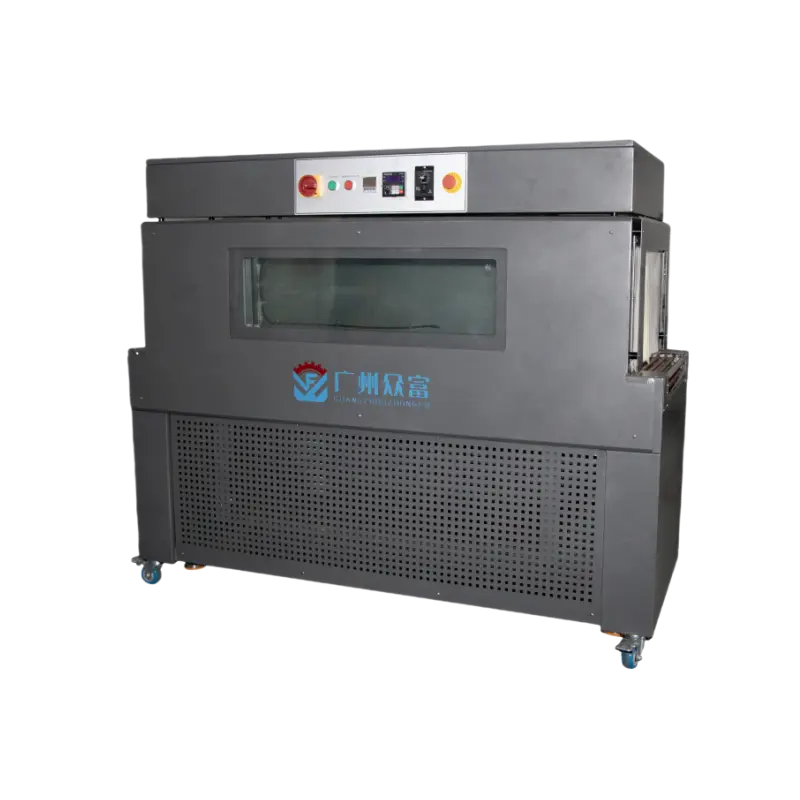
Heat-shrinking equipment matched to the product, film and sealing process. Operating settings follow the selected model and test conditions.
Tell us your product dimensions, desired pack format and target output so we can recommend a configuration and prepare a quote.
Lead time and paymentAllow clearance for the wrapped pack and confirm the electrical supply for your chosen configuration.
| Model | Listed chamber L × W × H | Listed power |
|---|---|---|
| S450 | 1000 × 450 × 250 mm | 9.6 kW |
| S550 | 1500 × 540 × 350 mm | 12 kW |
| S650 | 1700 × 630 × 350 mm | 20 kW |
| S800 | 1700 × 700 × 280 mm | 23 kW |
Feed a film-wrapped pack from the sealing section.
The tunnel applies heat as the pack moves through it.
Match temperature and transfer settings to the product and film.
Arrange the exit and cooling requirements around the pack.
A shrink stage after a suitable film-sealing machine.
Choose the tunnel opening and handling around the pack.
Assess low-temperature film and test the complete process.
Check clearance in the usable chamber opening and that the conveyor supports the proposed load.
Use the actual film to test temperature, airflow and belt speed against the required finish.
Check spacing as packs enter from the sealer and assess the tunnel at the target line output.
No. Line output also depends on pack length, spacing and the sealing stage. Confirm both the transfer settings and target packs per minute.
Review the film, conveyor height, pack dimensions and operating requirements together.
It may help with heat-sensitive products, subject to suitable material and product testing.
We confirm the production schedule after reviewing your equipment configuration and test requirements. The quotation states when lead time starts and the expected date the equipment will be ready for shipment. Transit and on-site work are specified separately when included.
The formal quotation states the payment stages, currency, contracting entity and agreed delivery terms. Where a trade term is quoted, it identifies the named place or port.